Stage & contract carriage buses
State transport, private route buses, tourist and contract buses carrying passengers for hire.
Generally covered
AIS 140 GPS Tracking Solutions
What AIS 140 requires, which vehicles it applies to, how VLT devices and emergency buttons work, and how we help transport operators through selection, installation and activation.
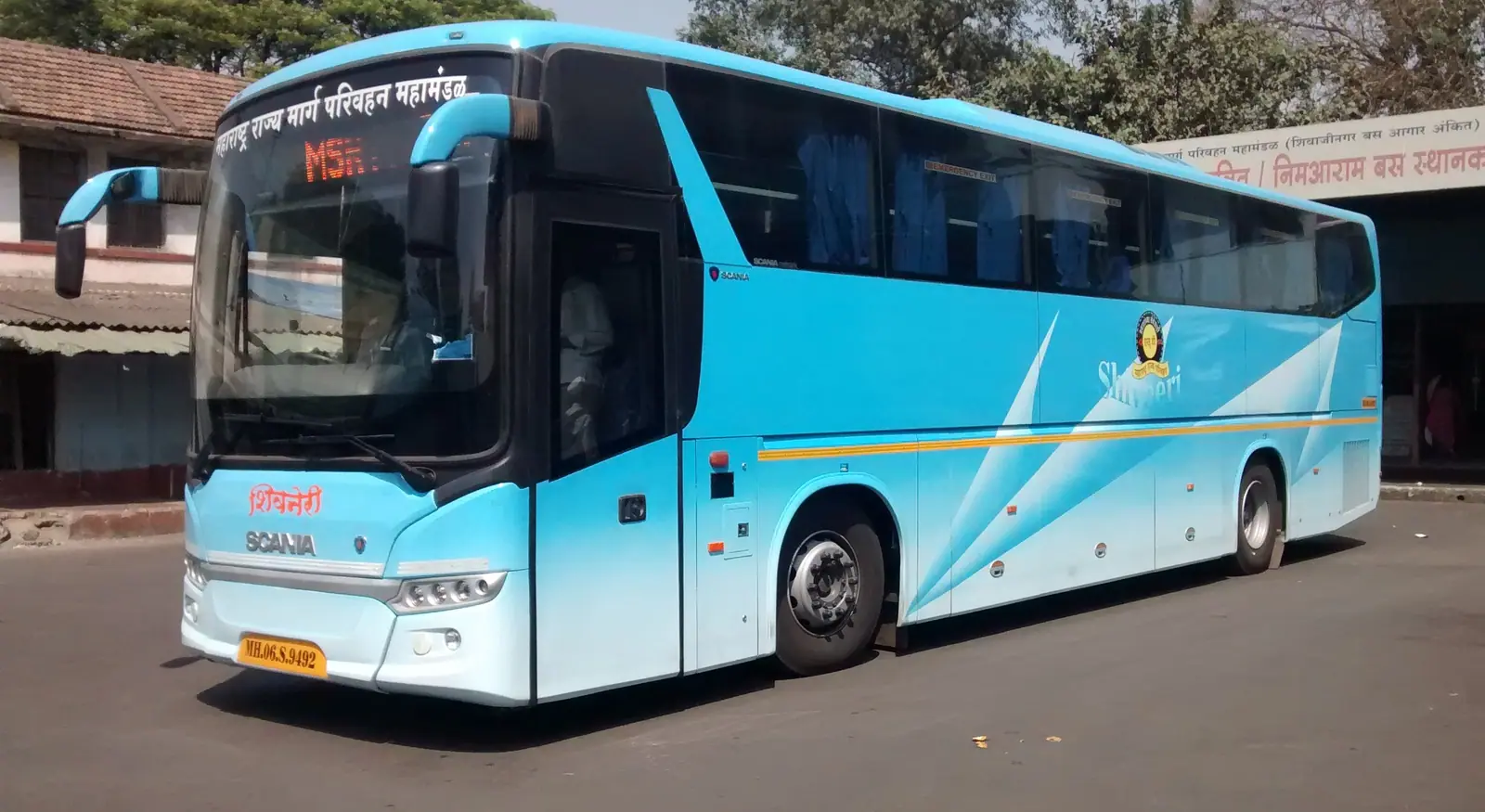
Photo: public service coach, shown for illustration only — no operator relationship implied.
Introduction
AIS 140 is an Automotive Industry Standard titled Intelligent Transportation Systems (ITS) — Requirements for Public Transport Vehicle Operation. It is published by the Automotive Research Association of India (ARAI) and sets out how ITS equipment for public transport vehicles in India should work and be tested.
The part most operators encounter is the Vehicle Location Tracking (VLT) device with emergency buttons. Through an amendment to the Central Motor Vehicles Rules (Rule 125H, notified in 2016), the Government of India made VLT devices and emergency buttons mandatory for applicable public service vehicles. The devices must be type-approved as conforming to AIS 140.
The standard also describes other ITS elements for public transport — such as camera surveillance and passenger information systems — whose applicability depends on vehicle category and on separate notifications.
Applicability
Rule 125H applies to public service vehicles — vehicles carrying passengers for hire or reward — with specified exceptions. Your State Transport Department may also issue its own notifications and timelines.
State transport, private route buses, tourist and contract buses carrying passengers for hire.
Generally coveredMotor cabs and maxi cabs operating under permit, including those used by app-based and corporate transport.
Generally coveredWhere they are operated as public service vehicles under a permit. Check how your state classifies them.
Check state rulesNot public service vehicles under Rule 125H, but some states or permit conditions require VLT devices for certain goods carriages.
Check state rulesRequirements came into force for public service vehicles from 2018 under MoRTH notifications, with transitional provisions for vehicles registered earlier. Confirm the current position for your vehicle category with your RTO or State Transport Department.
AIS 140 devices
A VLT device is compliant only when that specific model holds a valid type-approval certificate from an authorised testing agency (for example ARAI or ICAT) against AIS 140. A device marketed as “GPS tracker” is not automatically AIS 140 compliant.
Exact technical values — reporting intervals, battery duration, message formats and test procedures — are defined in AIS 140 and its amendments. We verify them against the device’s certificate and the current standard; we do not quote figures from memory.
Emergency / panic button
Emergency buttons are installed within reach of passengers, plus a dedicated button for the driver, as described in AIS 140. The exact number and placement depend on vehicle type and seating layout.
Emergency response is operated by government authorities through state systems. IT System Logic does not operate, own or connect directly to any government emergency system. Our role is to help make sure the device, buttons and configuration are installed and tested correctly.
Location, communication & reporting
The device reports position, speed and status at intervals defined by the standard and configuration. Authorities view this through the state backend.
Data travels over cellular networks to the server address configured during activation. Configuration must follow the state’s instructions.
Emergency, tamper, power disconnect and device health messages, as specified for the device type.
Where the device and state process allow it, data can also feed a fleet platform for the operator’s own monitoring.
Trip, distance, halt and alert reports for your managers, through a fleet tracking platform.
Journey playback and route analysis — see our vehicle tracking page.
Hardware & software architecture
A simplified view. Items with solid outlines are part of the compliance setup; dashed outlines are optional operator tools.
Under the 2018 order, device manufacturers upload type-approval details to the VAHAN system, and each fitted device is linked to its vehicle record through the process your state follows. The device must be configured to report to the backend designated by your state.
If you also want operator-side tracking, we check whether your device model and state process allow data to be sent to an additional platform, and configure it only where permitted. We do not claim direct integration with any government system.
Installation & commissioning
How we support an AIS 140 installation. Exact steps for registration and certification follow your state’s current procedure.
Vehicle categories, permits, count and your state’s current VLT requirements.
A device model with valid AIS 140 type approval, accepted by your state’s process. We review the certificate before supply.
Device mounting, power wiring and emergency buttons positioned as required for the vehicle layout.
Embedded SIM activation and configuration to report to the state-designated backend.
Device-to-vehicle mapping through the channels used in your state (typically handled with the device manufacturer or its authorised dealer).
Location reporting and emergency button tests, with results recorded.
Installation and fitment documents you may need for permit or fitness processes.
SIM and data plan renewals, device health checks and re-installation if the vehicle changes.
Know the difference
| Item | Required for applicable vehicles | Optional / value-added |
|---|---|---|
| Type-approved VLT device | Yes | — |
| Emergency buttons | Yes | — |
| Reporting to state-designated backend | Yes | — |
| Device registration / mapping (per state process) | Yes | — |
| Operator live-tracking dashboard | — | Optional |
| Route playback & trip reports | — | Optional |
| Geofence, overspeed & ignition alerts to managers | — | Optional |
| Passenger notifications (e.g. WhatsApp) | — | Optional |
| Camera surveillance / passenger information systems | Covered by AIS 140 for certain categories — applicability depends on separate notifications; check for your vehicles. | |
Compliance verification checklist
Use this checklist when evaluating any AIS 140 device or installer — including us. Ticking items here only helps you keep track; nothing is saved or sent.
AIS 140 FAQ
General answers. Confirm specifics for your vehicles with your RTO or State Transport Department.
AIS stands for Automotive Industry Standard. AIS 140 covers Intelligent Transportation Systems requirements for public transport vehicle operation in India, including vehicle location tracking devices and emergency buttons.
Under Rule 125H of the Central Motor Vehicles Rules, VLT devices with emergency buttons are mandatory for public service vehicles, except two-wheelers, e-rickshaws, three-wheelers and transport vehicles that do not need a permit. States may add their own requirements, so confirm with your RTO or transport department.
No. The specific device model must be type-approved against AIS 140 by an authorised testing agency, and it must be accepted by your state’s VLT process. Ask for the type-approval certificate and check that the model matches.
No — we do not claim to manufacture or certify devices. Certification is issued to device models by authorised testing agencies. We help you choose a device with valid type approval, install it and get it working, and we show you the certificate for the model we supply.
AIS 140 describes emergency buttons within reach of passengers plus a dedicated button for the driver. The number depends on the vehicle type and seating layout, and states may specify further details. We confirm the count for your vehicle during the requirement check.
Alerts go to the backend designated by the state, which may be linked to the state’s emergency response system. Response is handled by the responsible authorities. Private companies, including us, do not operate government emergency response.
Often, yes — if the device model and your state’s process allow data to be sent to an additional fleet platform. This is an optional extra and does not replace compliance reporting.
Usually the SIM and data plan renewal, any platform subscription you choose and occasional maintenance. We explain recurring costs clearly in our quotation.
AIS 140 inquiry
Tell us your vehicle types, how many vehicles you operate and your state. We will help you understand what applies and what a compliant setup involves.
Tell us what you need. Fields marked with an asterisk are required.